How to choose an NVR: channels, incoming bandwidth and hard drives
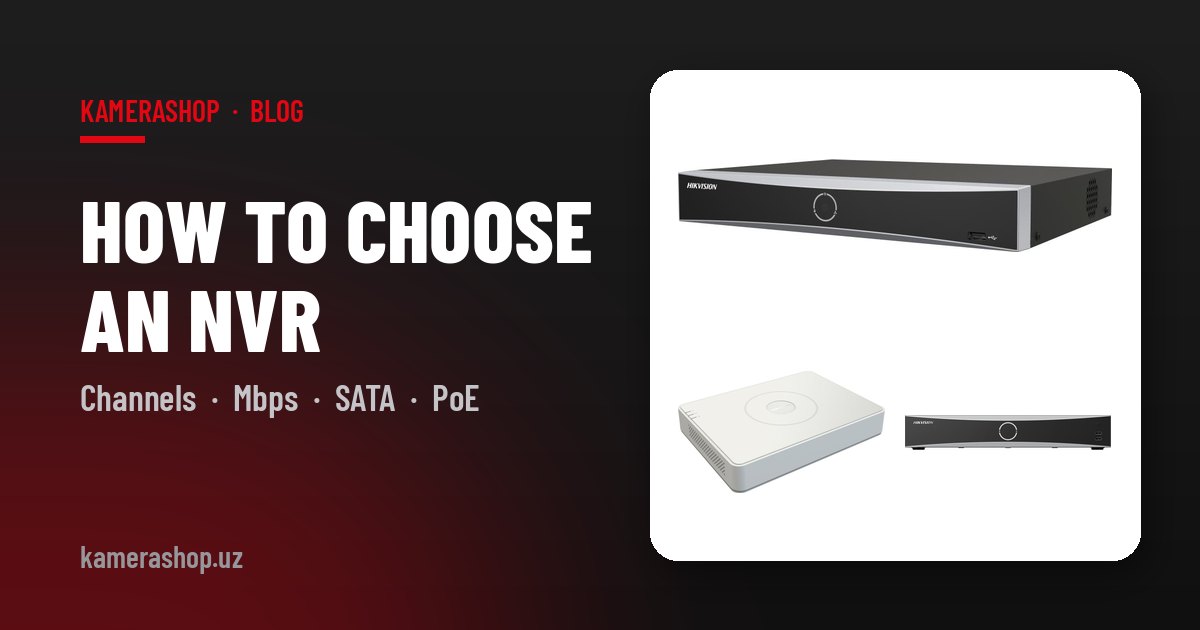
An NVR (network video recorder) receives video from IP cameras, writes it to a hard drive and streams it to your phone. Even with good cameras, the wrong recorder lets the system down: a camera will not connect, recording stutters or the archive runs out too soon. Here are the six criteria that matter.
1. Number of channels
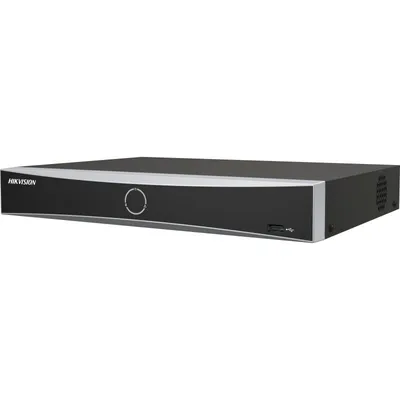
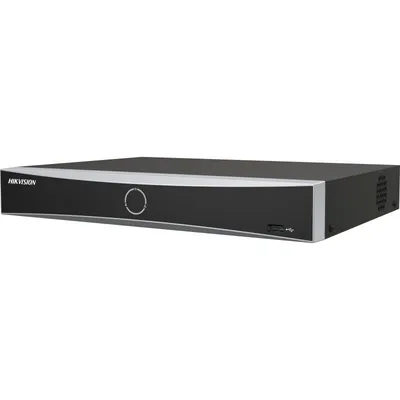
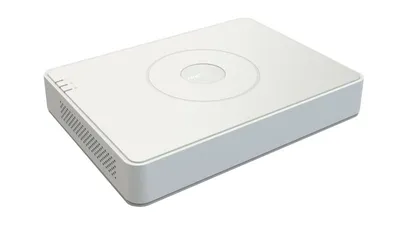
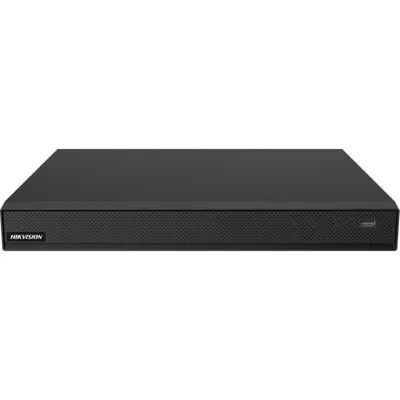
One channel is one camera. The most common sizes are 4, 8, 16 and 32 channels. Leave room for future cameras: 8 channels for 6 cameras, 16 for 10. For example, the DS-7604NXI-K1 has 4 channels, the DS-7608NXI-K1 8, the DS-7616NI-K2/4K 16 and the DS-7732NXI-K4 32.
2. Incoming bandwidth
This figure is often overlooked, yet it decides how many cameras, and at what quality, the recorder can take. It is the total stream from all cameras the NVR can accept at once, in Mbps. Hikvision cameras typically stream at up to 8 Mbps (the DS-2CD2043G2-I is rated 32 Kbps to 8 Mbps). So eight cameras at their maximum add up to 64 Mbps, which fits within the 80 Mbps incoming bandwidth of the DS-7608NXI-K1. The rule is simple: number of cameras × stream per camera must stay below the NVR's figure.
3. SATA bays and capacity
How many days of footage you keep depends on the drives. Compact recorders have one SATA bay; larger ones have 2, 4 or more:
- DS-7608NXI-K1 — 1 SATA, up to 10 TB per drive;
- HL-NVR-208MH-K — 8 channels, 2 SATA, up to 16 TB each;
- DS-7616NI-K2/4K — 16 channels, 2 SATA, up to 12 TB each;
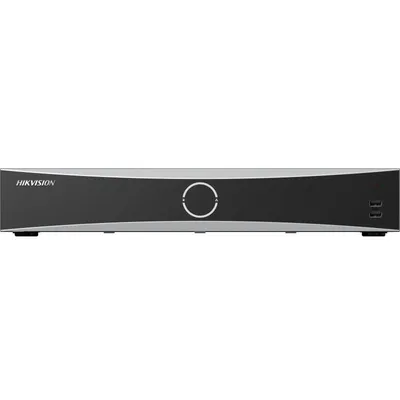
- DS-7732NXI-K4 — 32 channels, 4 SATA, up to 16 TB each.
To work out the capacity, see how much storage CCTV needs. Surveillance-grade drives are in the HDD section.
4. PoE NVR or standard NVR
A PoE NVR has PoE ports on the back: each camera gets data and power over a single cable, with no separate switch. The DS-7108NI-Q1/8P, for instance, has 8 PoE ports (IEEE 802.3af/at) with up to 75 W of PoE power. For a small site it is the simplest option — every cable runs to one point.
A standard NVR has no PoE (the DS-7616NI-K2/4K lists "PoE: Not Support"), so cameras connect through a PoE switch. With many cameras spread across a building, switches placed near the cameras save cable. More in how to choose a PoE switch.
5. H.265+ compression
H.265+ is Hikvision's extra compression on top of H.265: the same picture quality takes less disk space. All the recorders above decode H.265+. Check that your cameras support it too to get the full benefit.
6. Smart features: AcuSense and AcuSeek
A basic motion detector triggers on branches, shadows and cats. Motion Detection 2.0 tells people and vehicles apart and cuts false alarms: the DS-7608NXI-K1 supports it on all channels via the cameras and on one channel by itself. On larger sites, searching the archive matters: the DS-7732NXI-K4 supports AcuSeek — with AcuSense cameras it indexes up to 50,000 targets a day and finds them by a text query such as "red car".
Summary
| Site | Recommendation |
|---|---|
| Home, 2–4 cameras | DS-7604NXI-K1 |
| Small shop, all cables to one point | PoE NVR DS-7108NI-Q1/8P |
| Office, 8 cameras, long archive | HL-NVR-208MH-K (2 drives) |
| Company, 16 cameras | DS-7616NI-K2/4K + PoE switch |
| Large site, 32 cameras, search | DS-7732NXI-K4 |
All recorders are in the NVR section. Send us your camera list and we will match the recorder and drives.